
Reduction of the CO₂ footprint
Low carbon concrete elements
At CRH Denmark, we continuously work to improve our products, and one of the results is our low carbon concrete elements (LCC elements). The concrete composition in our LCC elements has been optimised for a lower CO₂ footprint, whilst maintaining CRH Denmark’s high quality and a production flow that supports efficiency and economic responsibility.
The low carbon concrete elements (LCC elements) are produced with a concrete in which the proportion of cement clinker is reduced by substitution with other active binder materials such as calcined clay and fly ash. This means that the CO₂ footprint can currently be reduced by up to 25%. For our lightweight concrete elements, however, it is possible to achieve an even greater CO₂ reduction of up to 45% compared to a wall element in standard concrete.
We take our responsibility seriously and continue to work on the next generation of low carbon concrete elements (LCC elements) with further CO₂ reductions, in order to achieve an overall reduction of 50% across all our concrete elements by 2030.
Projekt: Danfoss House i Sønderborg. Opført 2022
DANFOSS HOUSE
31,4 ton CO2-reduktion med
low carbon concrete i stedet for basisbeton.
Download projekt EDP her.
WHICH PRODUCTS ARE DELIVERED AS LOW CARBON CONCRETE ELEMENTS?
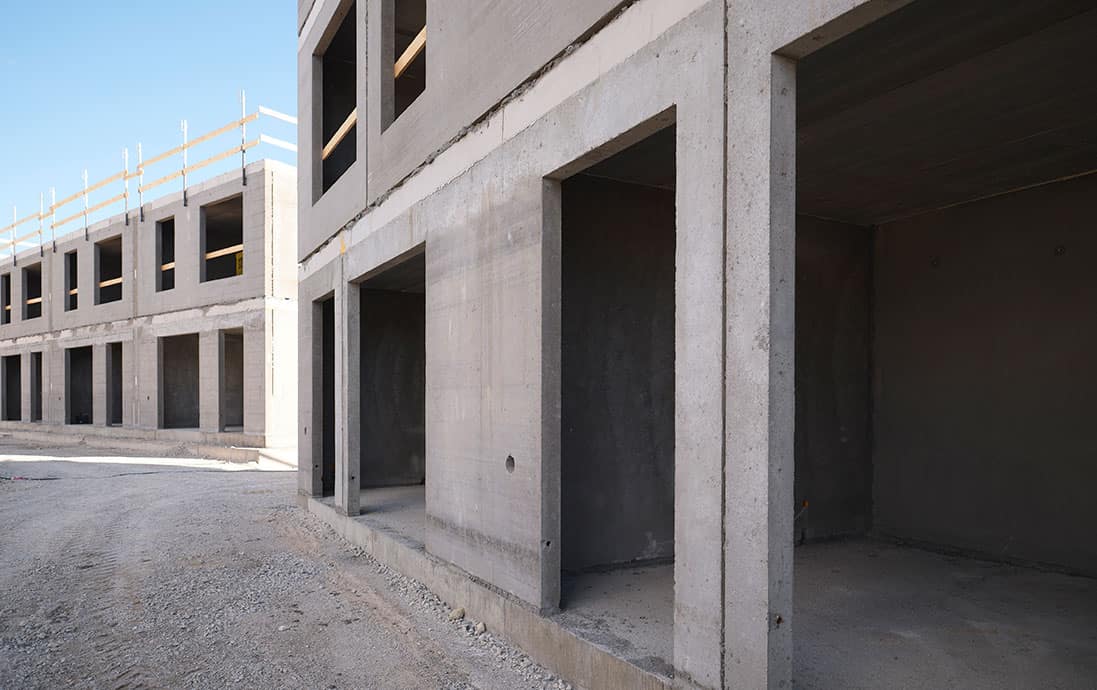
We supply wall elements (concrete and lightweight concrete), sandwich facade elements, columns and hollow core slabs within the low carbon concrete segment.
Our 2.4 m wide hollow core slabs are today produced as standard with low carbon concrete (see EPD 21065-5), and during spring 2023 this will also become standard for our narrower 1.2 m wide hollow core slabs.
Similarly, we have project EPDs for our concrete and lightweight concrete walls. Examples of CO₂ savings with lightweight concrete:
LAC 15/1850 (see EPD 22012-2) Saving of 42% CO₂ compared to a wall in standard concrete of the same thickness. LAC 10/2000 (see EPD 22012-5) Saving of 45% CO₂ compared to a wall in standard concrete of the same thickness.
During Q1 2023, we are producing with low carbon concrete at our factories that produce lightweight concrete and concrete wall elements, hollow core slabs and sandwich facade elements. By the end of Q1 2023, our concrete staircases and balcony elements will also be produced with low carbon concrete as standard.
LOW CARBON CONCRETE
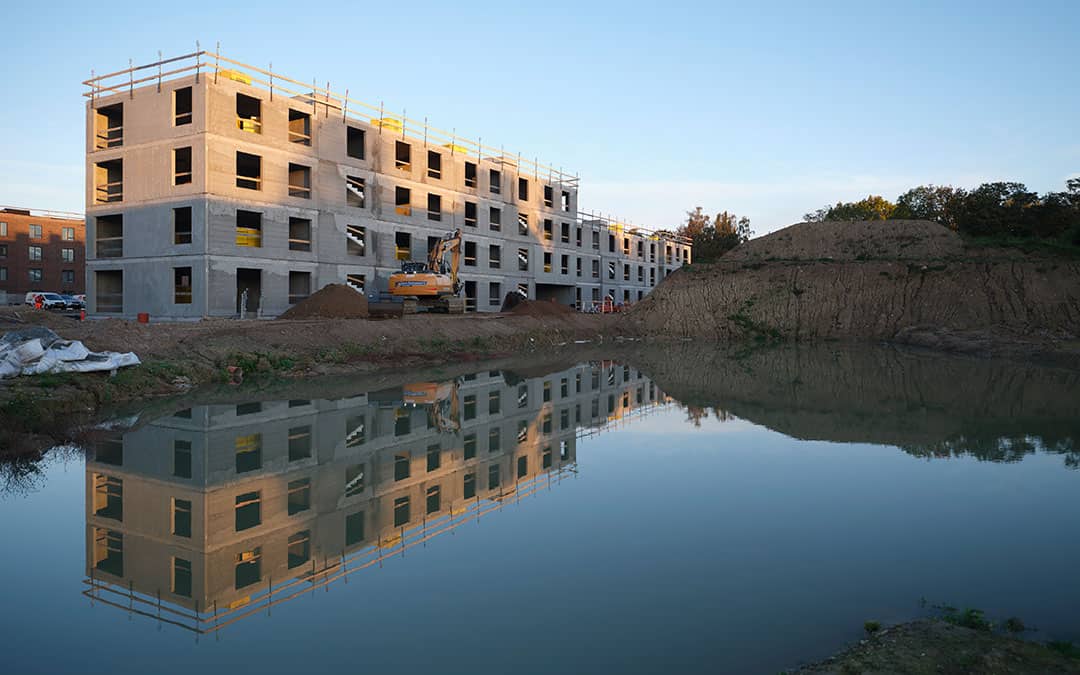
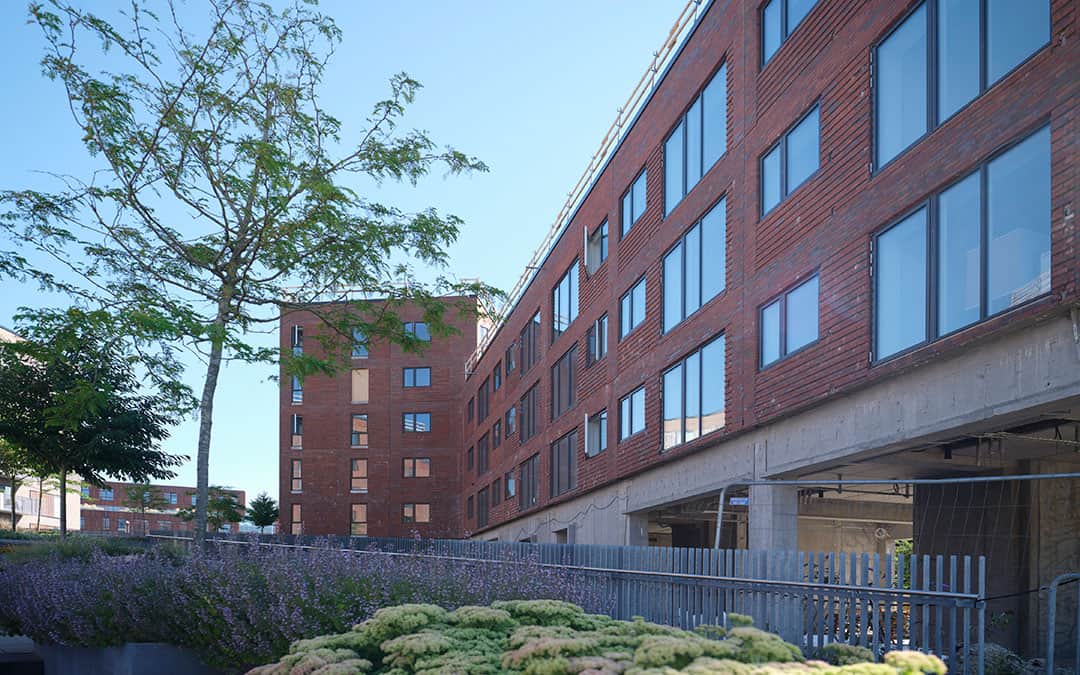
SEE CASE STUDIES ON LOW CARBON CONCRETE

Influence on design
Calculation tools
The design of the individual concrete elements in a construction project has a significant influence on the CO₂ footprint. We work with various calculation tools that can contribute to the optimisation of material consumption.
Project-specific EPDs
Our project EPDs take into account the CO₂ improvements we have made: the use of low carbon concrete, design optimisation and production optimisation.
AVOID OVER-DIMENSIONING
With OPTUM CS, we can fully exploit the potential of concrete and thereby avoid unnecessary over-dimensioning, which both increases the cost of construction and places an unnecessary burden on the environment.
ENVIRONMENTAL PRODUCT DECLARATIONS FOR PROJECTS
Use project EPDs instead of product EPDs
In order to obtain the most accurate CO₂ calculations, it is important that you, as a consultant, work with our project EPDs. The earlier product EPDs are based on our 2020 production figures and therefore do not reflect the significant work that has been carried out to minimise the CO₂ footprint. The project EPDs reflect current production, which has been optimised with regard to low carbon concrete, production optimisation and design.
It is important to emphasise that our project EPDs represent a production level that we have achieved and that we produce at every day. These are not theoretical calculated scenarios that we may potentially be able to reach.
We cannot recommend that CO₂ calculations are made on the basis of industry EPDs.
Product EPD versus project EPD
The basis for comparison of CO₂ savings
If a basis for comparison is to be established between products/producers, it is important that the GWP (A1-A3) is converted to CO₂ impact per tonne of product. This is how GWP is converted so that the figures can be compared:
Example: Product EPD
180 mm wall
13% voids
62.9/0.374 = 168.18 kg CO₂ per tonne of element
Example: Project EPD
180 mm wall
13% voids
54.6/0.410 = 133.17 kg CO₂ per tonne of element